Burnout is a thief of joy, but sleep can make it better, and so can a sneak peek of my new cover!
📚 Current Read: The Bronze Horseman by Paulina Simons.
🍿 Current Watch: Widow's Bay on AppleTV (mmm Matthew Rhys)
☕️ Current Drink: It's summer so electrolytes.
Hello, hello and thank you for making the release of A Faire Affair so lovely! For my local friends, the Tempted by Fiction event in Nashville was so much fun and a great way to end the week.
I'm going to be honest. I tried to do too many things this year. Had a little meltdown, took a little pause. Got some sleep. Things are looking better, but this is your reminder (if you need it) to take care of you, prioritize you, and get some sleep! I'm going to try to take full advantage of a quiet June to do all the things while also getting some much needed rest.
I don't think it's a secret that I adore historical romance. My WWI historical is on the way, but just in case it bears stating, historical is my very favorite. So this summer, I'm participating in a little something extra special for the history nerds, and to give myself a little extra inspiration to get me over the last hump. Some friends and I have banded together to offer special discounts on our favorite historical romance (Check it out! There's a special coupon for Mistress Mack 😉), and today I want to let my special guest Hillary Bowen tell you about the research behind her book, which is very near and dear to my heart: OUT WITH LANTERNS, a story of WWI.
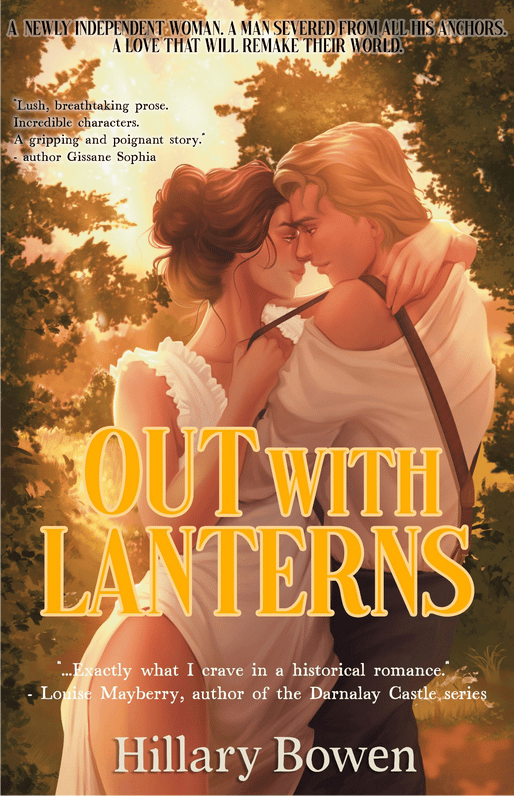
In my historical romance, Out with Lanterns, the main female character, Ophelia Blackwood, joins the Women’s Land Army for the duration of World War I. In order to understand what it might be like for an upper class woman to undertake farm labour, I researched early organization attempts and the formation of the Women’s Land Army in England. I also read about the reception of the women working in the WLA, how recruitment functioned, and what living situations were like. I was also able to read first hand accounts of women who served in the WLA and to read through the online archive of The Landswoman, the official magazine of the WLA, which gave a really vibrant snapshot of the women’s experience of war work.
Britain in 1914
The harvest in August 1914, when Britain declared war on Germany, was earlier and greater than usual and the loss of working men, horses and fodder to the war was not seen as a problem.
The widespread view was that the war would be over by Christmas that year, however by January of the following year it was clear that the fighting would go on for much longer. By 1915, MPs in the government were acknowledging that the issue of farm labour and food production would be a significant and longer lasting issue than first assumed. It would seem that regardless of public opinion, women’s labour would be required to get the country through the threat of food shortages and German blockades. The main issue to be addressed was training - initial trials of two week training programs proved wholly inadequate and would need to be standardised in some manner. The formation of War Agricultural Committees in the fall of 1915 was focussed particularly on organizing women for farm work.
Prejudice and Push Back
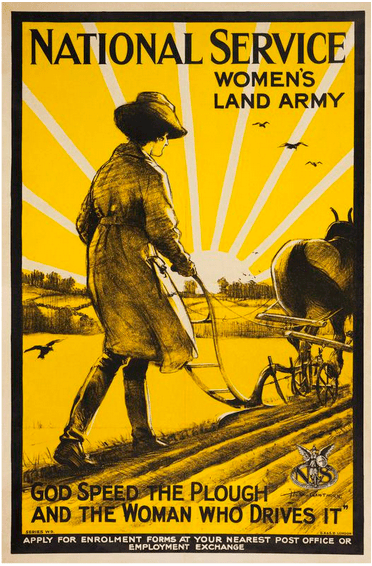
The initial work by the WACs formed under this new push bore little fruit largely because farmers were unwilling to take on women workers. There was the perhaps expected prejudices and conservative views of the farmers themselves, who thought women unlikely to be reliable or capable of the work, but also the attitudes of English women themselves. Among rural communities, there was a sense that a woman working the land was demeaned, and would be considered in some areas, “socially inferior to the domestic servant”. Add to these issues the very real problem of acquiring suitable footwear - the cost of boots being well out of the majority of women’s reach - and the lack of clothing that was socially acceptable and allowed for proper movement. Finally, the meagre wages offered did little to encourage women to volunteer in the face of all these challenges.
Through 1915 and into 1916 the Board of Agriculture began a more active propaganda campaign to address entrenched ideas about women’s capability to do the work, as well as encourage women themselves to volunteer. Articles extolling training programs and highlighting successful recruits appeared alongside well organized demonstrations of women at work. Competitions were held so that audiences, including sceptical farmers, could watch women ploughing, planting potatoes, and spreading manure. This flurry of recruiting and training placed a special emphasis on women with the right moral character and physique - “young, strong, healthy, educated … fond of animals and the outdoor life” By late 1916 nearly 2300 women had been trained or accepted as permanent labourers under the program, but as the war headed into its third year it became clear that the efforts were not nearly enough to deal with the threat of a German blockade or the spectre of food shortages. One government estimate suggested the country would need an additional 40,000 full time female workers to meet the demands. And thus, the Women’s Land Army was finally born.
Advertisements were placed in the largest papers and recruitment drives began calling for 10,000 able-bodied women. By the middle of July that year, 30,000 women had applied and over 2000 had already been placed on farms.
The WLA had three sections - agriculture [milking, ploughing, hoeing, harvesting, care of stock and horses, general farm work and planting trees], forage [baling hay, stacking and loading bales, chaff cutting, and work at hay stores], and timber cutting [felling trees, sawing, stacking and carting them].
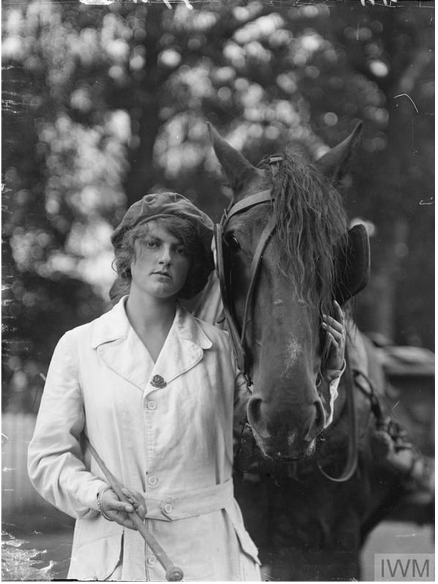
Upon being accepted, a woman would receive a free uniform including high boots, breeches, overalls, and a hat, as well as room and board during her training, some travelling expenses, and a small wage. They would then either be assigned further training or sent directly to work on a private farm. The majority of women would be engaged in general farm labour with special training eventually begun for thatching, hedging, and ploughing. As the WLA found its legs and the men of the country continued on fighting overseas, women took on jobs as varied as carters, mole catchers, and eventually driving and repairing tractors, still widely considered to be ‘new fangled contraptions’ by most farmers.
 The Pants are the Problem
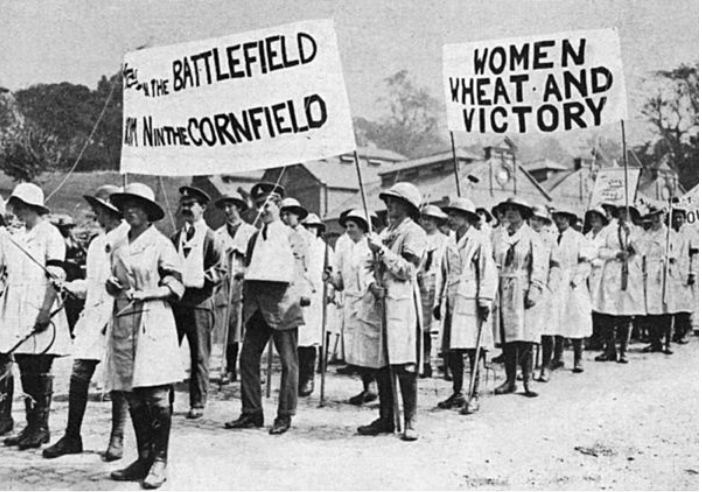
Once trained and assigned, many women still faced the ire and distrust of farmers, centered largely on their uniform. The influx of women with short hairstyles and trim breeches were a shock to those in the country and the whole endeavour was viewed with suspicion. The prevailing view of femininity, especially the one on display in the WLA newspaper adverts, a documentary movie, and calls to action, was at odds with what was considered acceptable. There were reports made to higher ups about women wearing their breeches while off duty or without their overall after work hours, surely signs of utter depravity. To combat this, the WLA enforced strict rules about decorum, exhorting their recruits to behave ‘like an English girl who expects chivalry and respect from everyone she meets’, and not to be seen smoking in public, entering the bar of a public house, or walking around with her hands in her pockets.
The Landswoman
First published in January 1918, The Landswoman was the official magazine of the WLA serving to way to communicate with its many members, inform the public of the royal interest in the success of the venture, to act as kind of family album for members to read about and connect with other recruits, and to stave off the loneliness of those women who were isolated on farms, but used to the bustle of the city. There were short stories and essays, columns by poultry experts, suggestions on ways to pass the evenings by staging plays or readings, information on sending packages to the front, even a section where women could write to the editor to request hard to find items that she might send by post from London. It was also a method of encouraging patriotic feeling about the WLA and its members, with reminders about the sacrifice they made and the necessity of supporting their work. If the advertisements suggested that one needn’t give up soft hands and glowing skin as the price of their war service, that was just one more hurdle for the women on the land to cross. They were caught in a continual loop - to replace men’s labour on the home front, but never be seen to unbalance the roles dictated by society at large.
The 1918 Armistice saw many women leave their posts with the thanks of the Director of the Women’s Branch of the Food Production Department, Meriel Talbot, while others stayed on through May 1919 to meet food production needs. In November 1919, the remaining 8000 members of the WLA were disbanded, and while there was some recognition of their contribution to the war effort as equal to that of the men abroad, it was not until 2008 that the WLA members’ work was officially recognized.
See this research in action! Buy Out with Lanterns from the Romance for History Nerds book collection through August 31! Read Now
I'll be sharing a little bit of history all summer long, so tune in next month for another spotlight—and hopefully by then I'll have a little exciting information to share about something really cool that I've been working on.
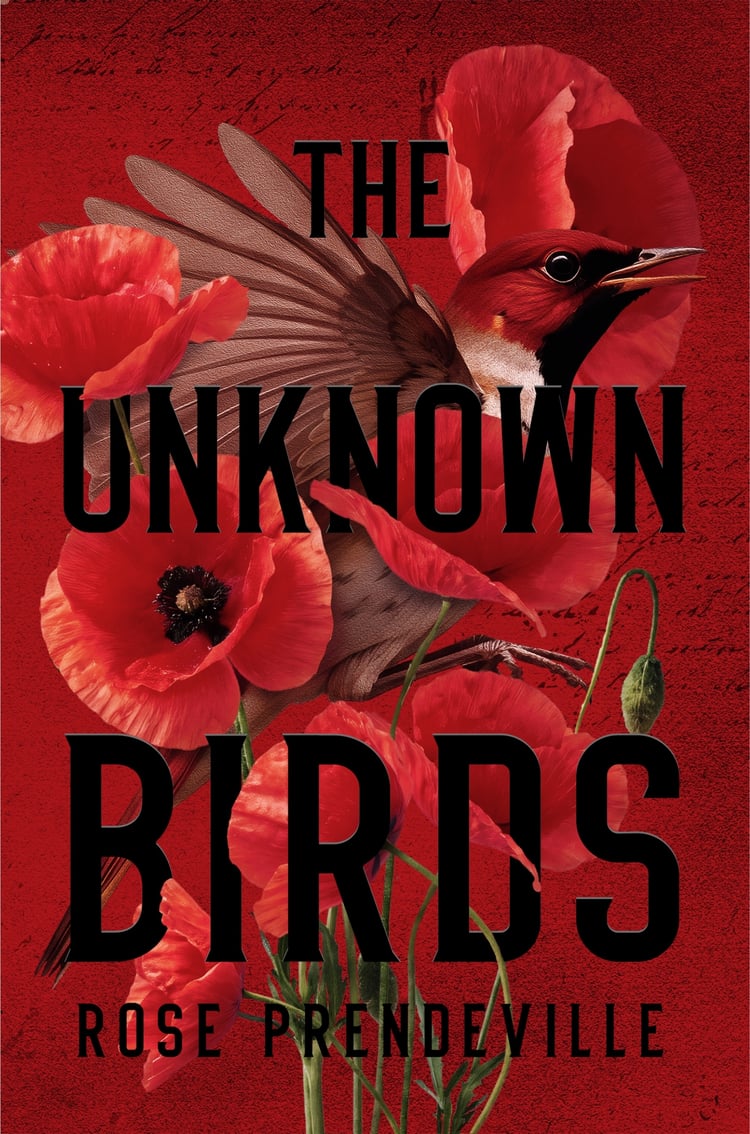
In the meantime, this hasn't even been shared on the socials, but I really wanted to share it with you.
Peep this absolutely stunning cover for my next book - THE UNKNOWN BIRDS.
It's maybe the most gorgeous thing I've ever seen 😍😍😍😍😍
My designer, fellow author Jessica Khoury, really did herself proud. I told her, "I don't know what I want it to look like, but it needs to have birds, and poppies, and be epic," and this is what she delivered. I literally can't stop looking at it.
More to come, I promise, but for now, stay safe, stay cool, and be well.
All the best,